




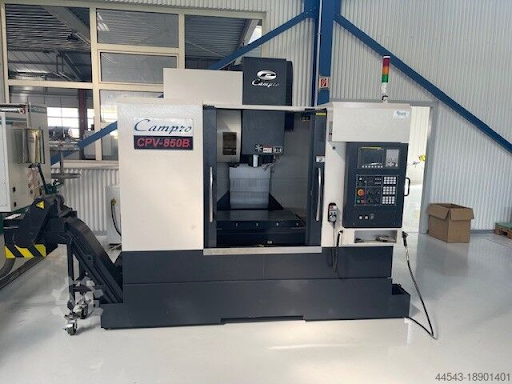

Modern manufacturing depends on precision, consistency, and efficiency to produce high-quality components across industries such as aerospace, automotive, medical, electronics, and industrial equipment. As production demands continue to grow, manufacturers rely on advanced machining technologies that can deliver accurate parts while minimizing waste and improving productivity.
Among the most widely used manufacturing methods, CNC vertical machining has become an essential solution for producing complex components with exceptional repeatability. Vertical machining centers (VMCs) combine computer-controlled precision, automated tool changes, and versatile machining capabilities to perform milling, drilling, tapping, and contouring operations efficiently. Their ability to handle a broad range of materials and part geometries makes them one of the most valuable assets in modern production facilities. Vertical machining centers are among the most widely used CNC platforms because they offer high accuracy, easier setup, and excellent versatility for many machining applications.
What Is CNC Vertical Machining?
CNC vertical machining is a subtractive manufacturing process in which a vertically oriented spindle rotates cutting tools to remove material from a securely mounted workpiece. The machine follows programmed instructions (G-code) to produce highly accurate parts with minimal operator intervention.
Typical machining operations include:
- Milling
- Drilling
- Tapping
- Boring
- Pocketing
- Contouring
- Surface finishing
Most vertical machining centers feature automatic tool changers that allow multiple machining operations to be completed in a single setup, improving productivity and reducing downtime.
How CNC Vertical Machining Works
The machining process generally follows these steps:
Design and Programming
Engineers create a digital model using CAD software, which is then converted into machining instructions using CAM software.
Machine Setup
The workpiece is securely clamped to the machine table, and the required cutting tools are loaded into the automatic tool changer.
Automated Machining
The CNC controller directs movement along the X, Y, and Z axes while controlling spindle speed, feed rates, and cutting depth to produce the desired geometry.
Inspection
After machining is complete, finished parts are measured to verify dimensional accuracy and ensure they meet design specifications. The integration of CAD/CAM programming with automated machining enables consistent production of complex components with high repeatability.
Advantages of CNC Vertical Machining
There are several reasons why manufacturers continue choosing CNC vertical machining for precision production.
High Precision
Computer-controlled movement delivers consistent dimensional accuracy across both prototype and production runs.
Excellent Versatility
Vertical machining centers can process numerous materials, including:
- Aluminum
- Steel
- Stainless steel
- Brass
- Titanium
- Plastics
- Composite materials
Improved Productivity
Automatic tool changers reduce manual intervention and allow multiple operations to be completed during one machining cycle.
Cost-Effective Production
Compared with some alternative machining systems, vertical machining centers often offer lower operating costs while maintaining excellent machining performance. VMCs are valued for their versatility, straightforward setup, and ability to support both prototype work and production environments.
Industries That Use CNC Vertical Machining
The flexibility of CNC vertical machining makes it suitable for many manufacturing sectors.
Common applications include:
- Aerospace components
- Automotive parts
- Medical devices
- Industrial machinery
- Mold and die manufacturing
- Electronics enclosures
- Precision tooling
These industries require tight tolerances and consistent quality that CNC machining can reliably deliver.
CNC Vertical Machining vs. CNC Turning
Manufacturers often compare milling and turning technologies depending on part geometry.
While CNC vertical machining is ideal for producing flat surfaces, pockets, slots, and complex contours, a CNC turning center is designed primarily for cylindrical or rotational parts where the workpiece rotates while the cutting tool remains stationary or follows programmed movements.
Many production facilities utilize both machining methods to manufacture different component types efficiently, allowing them to handle a broader range of production requirements.
Features to Look for in a Vertical Machining Center
When evaluating machining equipment, manufacturers often consider:
- Spindle speed
- Table size
- Axis travel
- Automatic tool changer capacity
- CNC controller capabilities
- Machine rigidity
- Coolant system
- Chip management
- Precision and repeatability
Selecting equipment that aligns with production requirements helps maximize efficiency and long-term performance.
Best Practices for Maximizing Productivity
Manufacturers can improve machining performance by following these practices:
- Use appropriate cutting tools for each material.
- Optimize spindle speeds and feed rates.
- Schedule regular machine maintenance.
- Secure workpieces properly before machining.
- Monitor tool wear.
- Verify machining programs before production.
- Perform routine quality inspections.
Consistent maintenance and process optimization help improve machine reliability while extending tool life.
Common Mistakes to Avoid
Even experienced operators should avoid these common issues:
- Incorrect tool selection
- Poor workpiece clamping
- Using worn cutting tools
- Skipping preventive maintenance
- Improper programming verification
- Ignoring coolant management
Addressing these factors helps reduce scrap, improve surface finishes, and maintain production efficiency.
Conclusion
CNC vertical machining continues to play a vital role in modern manufacturing by combining precision, efficiency, and versatility in a single machining platform. From producing complex aerospace components to high-volume industrial parts, vertical machining centers help manufacturers achieve consistent quality while improving productivity and reducing production costs. Businesses that also utilize a CNC machine in the USA can benefit from advanced manufacturing capabilities, reliable support, and solutions tailored to demanding production environments. As manufacturers adopt Industry 4.0 practices, vertical machining technology remains one of the most dependable solutions for producing precision components across diverse industries.