







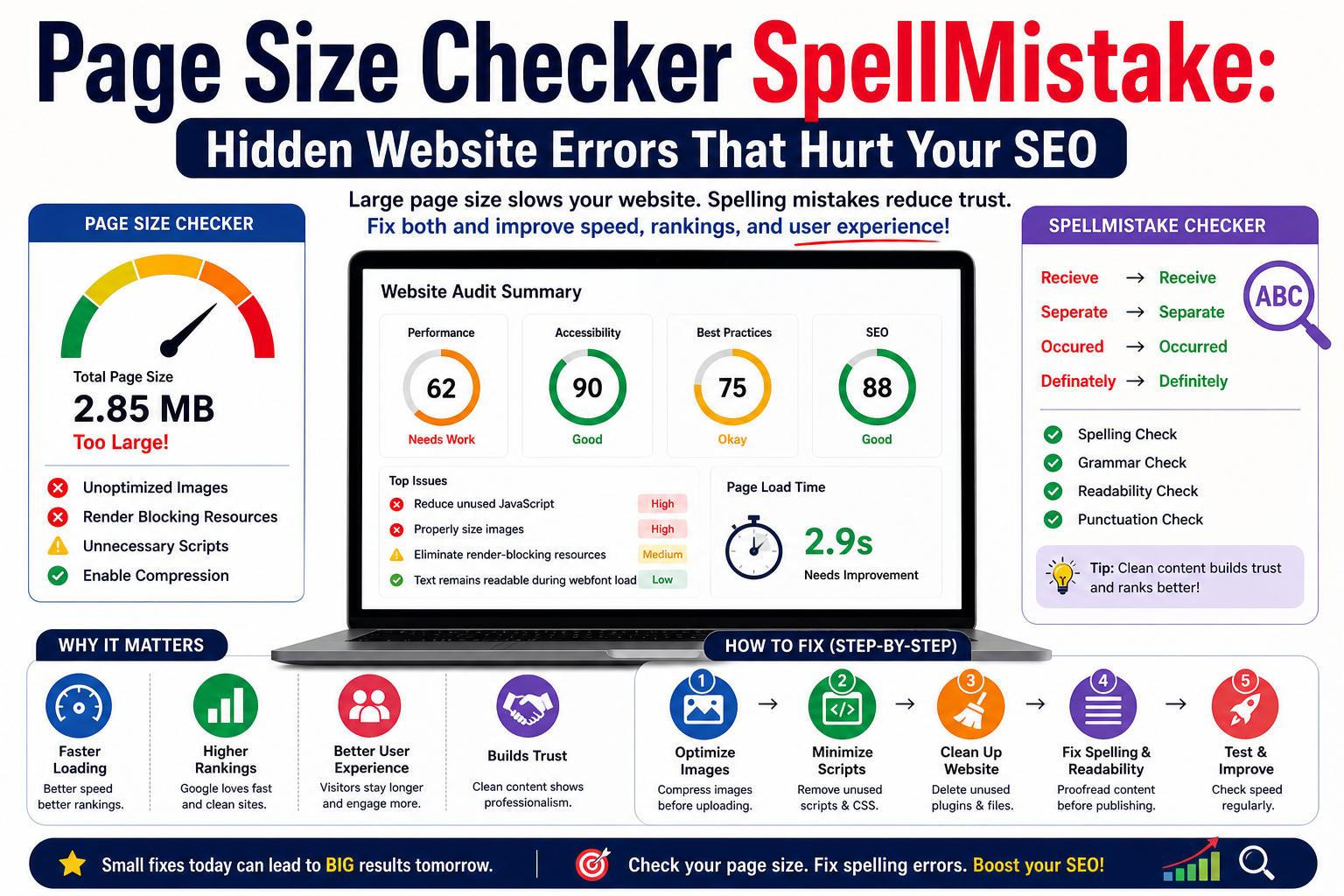
In the world of digital marketing, website development, and search engine optimization, performance plays a critical role in user experience and online success. One topic that often appears in technical discussions is page size, which refers to the total amount of data a webpage must load when a visitor accesses it. As website owners, developers, and SEO professionals seek tools to evaluate performance, search terms such as Page Size Checker SpellMistake have gained attention among people researching page optimization and website efficiency.
Modern websites are far more complex than they were a decade ago. High-resolution images, videos, scripts, fonts, animations, and interactive elements can significantly increase page size. While these features often improve design and functionality, they can also slow loading times if not managed carefully.
Understanding the meaning and relevance of Page Size Checker SpellMistake requires exploring the broader concept of page size, why it matters, how it affects user experience, and the strategies websites use to maintain optimal performance.
What Is Website Page Size?
Website page size refers to the total amount of data transferred when a webpage loads.
This includes HTML files, CSS stylesheets, JavaScript files, images, videos, fonts, and other resources required to display the page properly.
When people search for Page Size Checker SpellMistake, they are often interested in understanding how page size influences website performance and how it can be measured effectively.
Page size is usually measured in kilobytes (KB) or megabytes (MB). Smaller pages generally load faster, while larger pages may require more time and bandwidth.
The ideal page size depends on the type of website and the expectations of its audience.
Why Page Size Matters
Page size affects far more than loading speed.
A large webpage can increase waiting times, consume more data, and create a less satisfying user experience. Visitors often expect websites to load quickly, particularly on mobile devices.
The growing interest in Page Size Checker SpellMistake reflects broader concerns about website performance and usability.
Research consistently shows that users are more likely to abandon websites that load slowly.
Even small delays can influence engagement, conversion rates, and overall satisfaction.
For businesses, optimizing page size often becomes an important part of maintaining competitive performance online.
The Relationship Between Page Size and Website Speed
Website speed and page size are closely connected.
As page size increases, browsers must download more data before displaying content to users.
Although modern internet connections are generally faster than in previous years, page size remains a significant factor in loading performance.
Many discussions surrounding Page Size Checker SpellMistake focus on understanding this relationship and identifying opportunities for optimization.
A smaller page size often contributes to faster rendering, smoother navigation, and a better overall experience.
Speed remains one of the most important indicators of website quality.
How Webpages Became Larger Over Time
The average webpage today is significantly larger than websites from the early days of the internet.
Modern design trends prioritize rich visual experiences, interactive features, and multimedia content.
While these improvements enhance functionality, they also increase the amount of data required to load pages.
The relevance of Page Size Checker SpellMistake can be understood within this context of increasing digital complexity.
Developers must balance aesthetics and functionality with performance considerations.
Achieving this balance is one of the ongoing challenges of web development.
Understanding the Components of Page Size
A webpage consists of multiple elements that contribute to its total size.
Images often account for the largest portion of page weight. High-resolution graphics can dramatically increase data requirements.
JavaScript files also contribute significantly, especially on interactive websites.
Stylesheets, fonts, videos, and embedded content add additional weight.
When evaluating Page Size Checker SpellMistake, it is important to recognize that page size is rarely determined by a single factor.
Instead, it results from the combined impact of numerous resources.
Understanding these components helps identify optimization opportunities.
The Importance of User Experience
User experience is one of the strongest reasons to pay attention to page size.
Visitors expect websites to respond quickly and smoothly.
Large pages can create delays that frustrate users and reduce engagement.
The attention given to Page Size Checker SpellMistake reflects a growing awareness that technical performance directly influences user satisfaction.
Positive experiences encourage visitors to remain on a website longer and explore additional content.
Poor performance often has the opposite effect.
User experience remains a central goal of modern website optimization.
Mobile Devices and Page Size Challenges
Mobile browsing now accounts for a significant portion of internet traffic.
Mobile users often face unique challenges related to network speed and data limitations.
Large page sizes can create especially noticeable delays on mobile devices.
Many people researching Page Size Checker SpellMistake are interested in understanding how page size affects mobile performance.
Optimizing for mobile users requires careful attention to resource management and loading efficiency.
Mobile-friendly websites are increasingly essential for reaching modern audiences.
Search Engine Optimization and Page Size
Search engines aim to provide users with positive experiences.
As a result, website performance has become an important consideration within search engine optimization strategies.
While page size itself is not necessarily a direct ranking factor, it influences metrics related to speed and usability.
The popularity of Page Size Checker SpellMistake often stems from its connection to SEO performance and technical website audits.
Faster websites generally provide better experiences, which can support broader optimization goals.
Technical improvements often contribute to stronger overall performance.
Why Website Audits Matter
Website audits help identify technical issues that may affect performance.
These evaluations often examine page size, loading speed, resource usage, and user experience metrics.
Tools associated with Page Size Checker SpellMistake are typically considered valuable because they help reveal opportunities for improvement.
Regular audits allow website owners to address problems before they negatively impact users.
Performance monitoring supports long-term website health and effectiveness.
Continuous evaluation remains an important best practice.
The Role of Images in Page Weight
Images are often the largest contributors to webpage size.
High-quality visuals enhance design and communication, but oversized images can significantly increase loading times.
Many optimization efforts begin with image compression and resizing.
The interest surrounding Page Size Checker SpellMistake frequently relates to identifying image-related performance issues.
Modern image formats and optimization techniques allow websites to maintain visual quality while reducing file sizes.
This balance is essential for efficient performance.
JavaScript and Performance Considerations
JavaScript powers many interactive features found on modern websites.
While it enables dynamic functionality, excessive JavaScript can increase page size and delay rendering.
Developers often analyze script usage when evaluating performance.
The discussion around Page Size Checker SpellMistake highlights the importance of understanding how scripts affect page efficiency.
Reducing unnecessary code can improve loading times and user experiences.
Efficient coding practices contribute significantly to optimization efforts.
Content Delivery and Resource Management
Website performance depends not only on content size but also on how resources are delivered.
Efficient delivery methods help minimize delays and improve responsiveness.
Many optimization strategies focus on reducing the amount of data users must download.
People interested in Page Size Checker SpellMistake often seek ways to manage resources more effectively.
Resource management plays a critical role in balancing functionality with performance.
Successful websites prioritize efficiency throughout the development process.
Why Performance Monitoring Is Ongoing
Website optimization is not a one-time task.
New content, design changes, software updates, and additional features can all affect performance over time.
Continuous monitoring helps ensure that websites maintain acceptable loading speeds.
The relevance of Page Size Checker SpellMistake reflects the ongoing nature of performance management.
Regular evaluation allows website owners to identify emerging issues and respond proactively.
Consistent attention to performance supports long-term success.
The Connection Between Performance and Conversions
Website performance often influences conversion rates.
Visitors are more likely to complete desired actions when websites load quickly and function smoothly.
Slow pages can create friction that discourages engagement.
Many professionals exploring Page Size Checker SpellMistake are interested in understanding how technical performance affects business outcomes.
Improving page size and loading speed can contribute to better user experiences and stronger conversion performance.
Performance optimization often delivers measurable benefits.
Common Causes of Excessive Page Size
Several factors contribute to unnecessarily large webpages.
Unoptimized images, excessive scripts, embedded videos, unused code, and poorly managed resources are common examples.
Identifying these issues requires careful analysis.
The attention surrounding Page Size Checker SpellMistake highlights the importance of understanding where page weight originates.
Awareness of these factors supports more effective optimization strategies.
Addressing inefficiencies often leads to meaningful improvements.
The Evolution of Website Optimization
Website optimization has evolved significantly as technologies and user expectations have changed.
Early optimization efforts focused primarily on reducing file sizes and minimizing server requests.
Modern strategies involve more sophisticated techniques related to resource loading, caching, compression, and performance monitoring.
The growing visibility of Page Size Checker SpellMistake reflects continued interest in these evolving optimization practices.
Performance remains a moving target influenced by technological advancements and changing standards.
Adaptability is essential for staying current.
Why Technical SEO Includes Performance
Technical SEO encompasses various factors related to website structure and functionality.
Performance optimization is an important component because it affects usability and accessibility.
A website that loads efficiently is generally better positioned to meet user expectations.
The connection between Page Size Checker SpellMistake and technical SEO illustrates how performance contributes to broader optimization efforts.
Technical improvements often support both user experience and search visibility objectives.
Strong technical foundations benefit websites in multiple ways.
Accessibility and Performance
Performance and accessibility often work together.
Faster websites are typically easier for users to access across a range of devices and network conditions.
Reducing page size can improve experiences for visitors with limited bandwidth or older hardware.
The interest in Page Size Checker SpellMistake reflects recognition that performance optimization benefits a diverse audience.
Accessible websites help ensure that information remains available to as many users as possible.
Inclusivity remains an important consideration in web development.
Future Trends in Website Performance
The future of website optimization will likely involve continued emphasis on speed, efficiency, and user experience.
Advancements in compression technologies, resource management, and development practices are expected to improve performance capabilities.
As websites become increasingly sophisticated, maintaining efficient page sizes will remain important.
The relevance of Page Size Checker SpellMistake is likely to continue as website owners seek better ways to measure and optimize performance.
Innovation will create new opportunities while introducing new challenges.
Performance will remain a central focus of web development.
Why Page Size Awareness Matters
Many website owners focus heavily on content and design while overlooking technical performance.
However, page size influences nearly every aspect of the user experience.
Understanding how resources affect loading times helps developers make more informed decisions.
The ongoing interest in Page Size Checker SpellMistake demonstrates growing awareness of performance-related considerations.
Education and awareness support more effective optimization efforts.
Knowledge remains one of the most powerful tools for improving websites.
Conclusion
Website performance has become an essential component of digital success. As online experiences grow increasingly complex, managing page size remains one of the most important aspects of optimization. Large webpages can affect loading speed, user satisfaction, mobile usability, and overall effectiveness.
The attention given to Page Size Checker SpellMistake reflects broader interest in understanding and improving website performance. By examining page size, resource usage, and loading efficiency, website owners can identify opportunities to create faster and more user-friendly experiences.
As technology continues to evolve, performance optimization will remain a critical priority. Through careful resource management, ongoing monitoring, and a commitment to user experience, Page Size Checker SpellMistake will continue to be associated with discussions about website efficiency, technical improvement, and long-term digital success.