






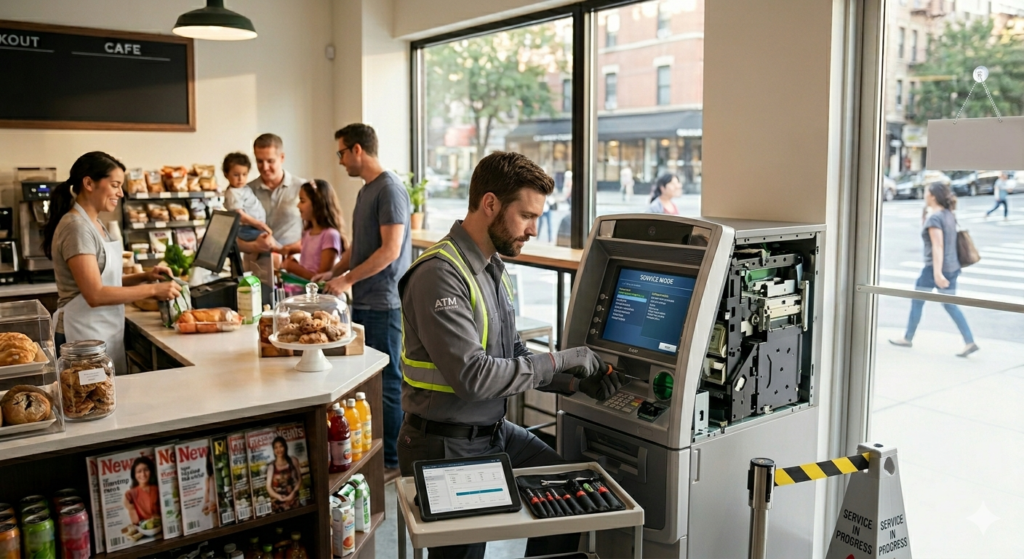
Automated Teller Machines (ATMs) remain an essential part of the banking and retail ecosystem by providing customers with convenient access to cash and other financial services. While modern ATMs are built with advanced technology, they require regular maintenance and timely support to ensure uninterrupted performance. Poorly maintained machines can lead to downtime, customer dissatisfaction, and increased operational costs.
Investing in professional ATM service helps financial institutions, retailers, and independent ATM operators maintain machine reliability, improve security, and extend equipment lifespan. Routine servicing not only minimizes unexpected breakdowns but also ensures compliance with industry standards, enhances customer experience, and supports efficient cash management. Industry best practices emphasize preventive maintenance, software updates, and trained service personnel to maximize ATM uptime and security.
What Does ATM Service Include?
Professional ATM service involves a wide range of maintenance and operational activities designed to keep machines functioning efficiently throughout their lifecycle.
Typical ATM servicing includes:
- Preventive maintenance
- Hardware inspections
- Software updates
- Cash dispenser calibration
- Receipt printer maintenance
- Card reader cleaning
- Security inspections
- Remote monitoring
- Emergency repair services
A comprehensive maintenance program helps prevent small issues from developing into major operational failures.
Why Regular ATM Maintenance Matters
Routine maintenance is one of the most effective ways to ensure consistent ATM performance. Businesses that prioritize scheduled servicing often experience fewer breakdowns and improved customer satisfaction.
Benefits of regular ATM service include:
- Reduced machine downtime
- Improved transaction reliability
- Longer equipment lifespan
- Enhanced customer confidence
- Lower repair costs
- Better operational efficiency
Consistent maintenance also supports compliance with security requirements and industry regulations.
Key Components of Professional ATM Service
A complete ATM service program addresses both hardware and software components to ensure optimal machine performance.
Preventive Maintenance
Preventive servicing includes routine inspections, cleaning internal components, checking electrical connections, and testing hardware performance before problems occur.
Software Updates
Keeping ATM software updated protects machines from vulnerabilities while improving compatibility with payment networks and security protocols.
Cash Handling Systems
Technicians inspect cash dispensing mechanisms, sensors, and note validators to ensure accurate and reliable cash transactions.
Security Checks
Security inspections verify the condition of anti-skimming devices, surveillance systems, locking mechanisms, and encryption features. Industry guidance recommends regular software updates and strong security controls to reduce fraud risks.
Common ATM Problems That Require Professional Service
Even advanced ATM systems may experience occasional technical issues.
Some common problems include:
- Cash dispensing errors
- Card reader malfunctions
- Printer failures
- Display screen issues
- Communication network errors
- Cash cassette jams
- Power supply failures
- Software glitches
Prompt ATM service helps resolve these issues quickly, minimizing disruption for customers and businesses alike.
Benefits of Working with Experienced Professionals
Choosing experienced maintenance specialists provides several operational advantages.
Businesses benefit from:
- Faster response times
- Skilled technical support
- Preventive maintenance programs
- Remote monitoring capabilities
- Reduced operational risks
- Improved ATM availability
Many organizations also choose a trusted ATM service provider to manage ongoing maintenance, repairs, and performance monitoring through structured service agreements.
Best Practices for ATM Maintenance
Organizations can improve ATM reliability by following several maintenance best practices.
These include:
- Scheduling routine inspections
- Installing software updates promptly
- Monitoring machine performance remotely
- Replacing worn components proactively
- Maintaining clean internal hardware
- Performing regular security audits
- Training authorized maintenance personnel
Following these practices reduces downtime while supporting consistent customer service. ATM industry organizations continue to recommend preventive maintenance and standardized servicing procedures as essential operational practices.
How Technology Is Improving ATM Service
Modern ATM management has become more efficient through technological advancements.
Current innovations include:
- Predictive maintenance
- Remote diagnostics
- Real-time performance monitoring
- Automated service alerts
- AI-assisted fault detection
- Cloud-based reporting
These technologies enable service teams to identify and resolve issues before they affect customer transactions.
Choosing the Right ATM Maintenance Strategy
Every business has unique operational requirements. Factors to consider when selecting a maintenance approach include:
- Number of ATM locations
- Expected transaction volume
- Service response requirements
- Security compliance needs
- Preventive maintenance schedules
- Availability of technical support
A structured maintenance strategy helps ensure consistent ATM performance while controlling long-term operating costs.
Future Trends in ATM Maintenance
ATM technology continues to evolve with increasing automation and smarter service capabilities. Financial institutions are adopting cash recycling machines, advanced monitoring systems, and predictive maintenance tools to improve efficiency while reducing operational expenses. These developments are reshaping how ATM networks are managed and serviced.
Conclusion
Reliable ATM operations depend on much more than quality hardware. Regular inspections, software updates, preventive maintenance, and strong security practices all contribute to uninterrupted service and improved customer satisfaction. Whether expanding an existing network or evaluating an ATM machine for sale, choosing a comprehensive maintenance strategy ensures long-term reliability, operational efficiency, and a better experience for customers. Businesses that prioritize proactive maintenance are better positioned to reduce downtime, extend equipment life, and maintain efficient ATM networks.