






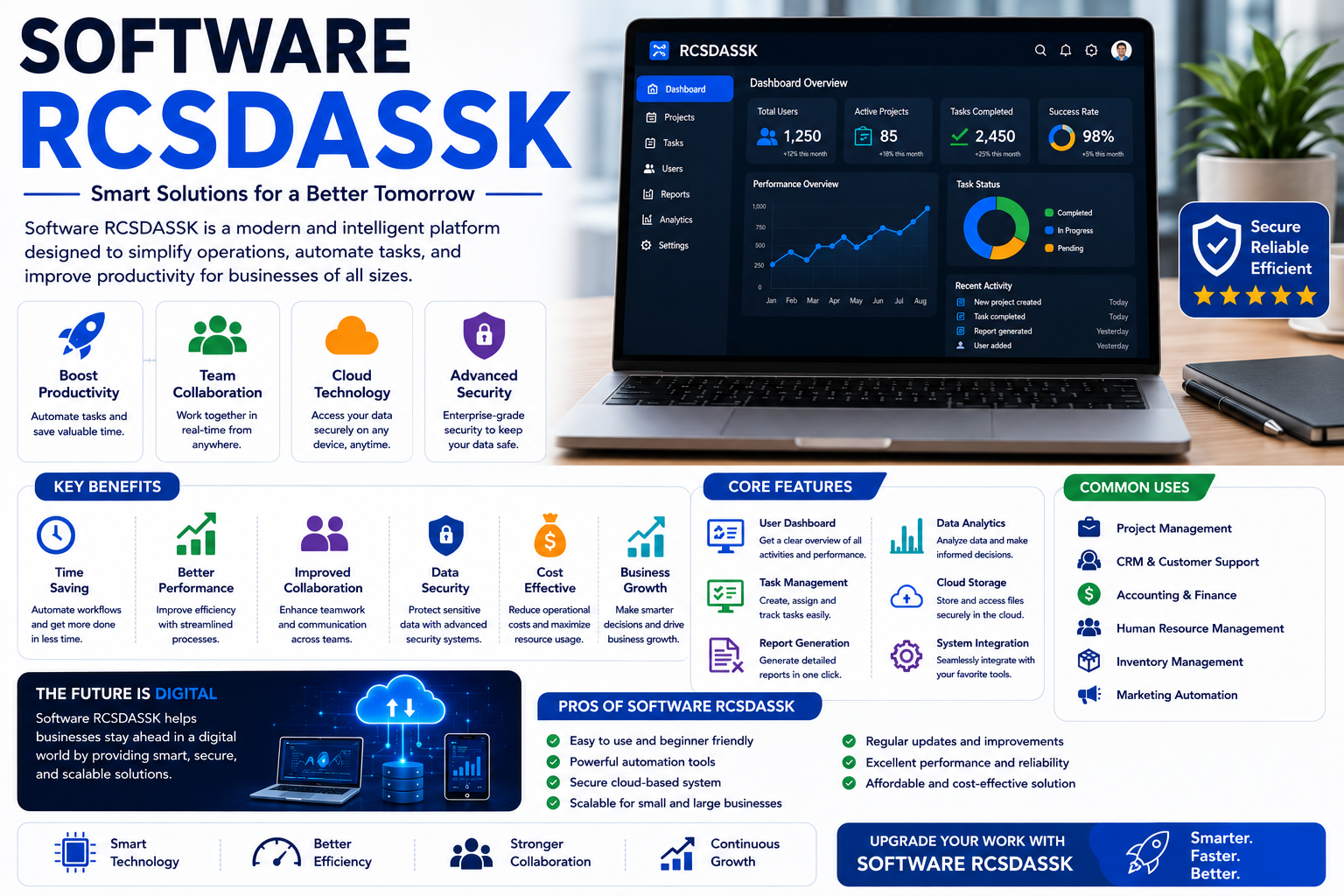
The software industry has become one of the most influential sectors in the modern world. From personal productivity applications and enterprise management systems to cloud computing platforms and artificial intelligence tools, software drives nearly every aspect of digital life. As organizations continue to embrace technological innovation, interest in emerging platforms, systems, and software solutions continues to grow. Within this evolving landscape, Software RCSDASSK has become a keyword associated with discussions surrounding software functionality, digital workflows, technological advancement, and modern business operations.
Software is no longer viewed as a simple support tool. Instead, it serves as the foundation for communication, automation, data management, decision-making, and operational efficiency. Businesses of all sizes rely on software systems to remain competitive, improve productivity, and adapt to rapidly changing market conditions.
Understanding the broader significance of Software RCSDASSK requires exploring how modern software solutions function, why they matter, and how organizations benefit from digital technologies in an increasingly connected world.
The Evolution of Software Technology
Software has undergone remarkable changes since the early days of computing.
Early systems were limited in functionality and often required specialized expertise to operate. As technology evolved, software became more accessible, user-friendly, and capable of handling increasingly complex tasks.
The growing attention surrounding Software RCSDASSK reflects broader interest in modern software solutions and their impact on businesses and individuals.
Today, software powers everything from smartphones and websites to industrial systems and global communication networks.
The rapid pace of innovation continues to reshape how software is developed, distributed, and utilized across industries.
Why Software Is Essential in the Digital Age
Modern society depends heavily on software.
Organizations use digital systems to manage finances, communicate with customers, coordinate teams, analyze data, and automate repetitive tasks.
The relevance of Software RCSDASSK can be understood within this larger context of digital dependence and technological advancement.
Without software, many everyday activities would become significantly more difficult and less efficient.
Businesses rely on digital tools to remain productive and competitive in increasingly complex markets.
Software has become an indispensable component of modern economic activity.
Understanding the Role of Software in Business Operations
Software influences virtually every aspect of business management.
From inventory tracking and customer relationship management to financial reporting and project coordination, digital systems help organizations streamline operations.
The discussion surrounding Software RCSDASSK often reflects growing interest in how software contributes to organizational efficiency.
Effective software solutions reduce manual workloads and improve information accessibility.
These improvements allow teams to focus more on strategic initiatives rather than routine administrative tasks.
Operational efficiency remains one of the primary reasons businesses invest in software technologies.
How Software Supports Productivity
Productivity is a key objective for organizations seeking growth and sustainability.
Software helps achieve this objective by automating processes, simplifying communication, and improving workflow management.
The increasing visibility of Software RCSDASSK highlights the importance of digital tools in supporting productive work environments.
Automation reduces repetitive tasks while collaboration platforms facilitate communication across departments and locations.
These capabilities help teams accomplish more within shorter timeframes.
Enhanced productivity often leads to improved performance and better resource utilization.
The Relationship Between Software and Digital Transformation
Digital transformation refers to the integration of technology into business processes and organizational strategies.
Software plays a central role in enabling this transformation.
The significance of Software RCSDASSK is closely connected to the broader trend of organizations adopting digital solutions to remain competitive.
Digital transformation involves more than technology alone. It also requires changes in culture, workflows, and decision-making practices.
Software provides the tools necessary to support these changes.
Organizations that embrace digital transformation often gain advantages in efficiency, innovation, and customer service.
Data Management and Modern Software Systems
Data has become one of the most valuable resources in the digital economy.
Organizations generate and process vast amounts of information every day.
The growing interest in Software RCSDASSK reflects awareness of the importance of effective data management within modern software environments.
Software systems help collect, organize, analyze, and secure information.
Access to accurate data supports informed decision-making and operational planning.
As data volumes continue increasing, software solutions become increasingly important for managing complexity.
Cloud Computing and Software Accessibility
Cloud computing has transformed how software is delivered and used.
Instead of relying solely on local installations, many organizations now access applications through cloud-based platforms.
The relevance of Software RCSDASSK can be understood within this broader shift toward flexible and scalable software deployment models.
Cloud solutions offer accessibility, collaboration, and reduced infrastructure requirements.
Users can access software from various devices and locations, improving convenience and flexibility.
These benefits have contributed to widespread cloud adoption across industries.
Software Security in an Interconnected World
As software becomes more integrated into daily operations, security grows increasingly important.
Organizations must protect sensitive information from unauthorized access and cyber threats.
The discussion around Software RCSDASSK often intersects with concerns about software security and risk management.
Effective security measures include encryption, authentication, monitoring, and regular updates.
Security is not a one-time consideration but an ongoing responsibility.
Strong protection helps maintain trust and support business continuity.
User Experience and Software Adoption
Even powerful software can struggle if users find it difficult to navigate.
User experience plays a critical role in determining the success of digital systems.
The growing attention given to Software RCSDASSK highlights the importance of creating software that is both functional and accessible.
Clear interfaces, intuitive navigation, and responsive performance encourage user adoption.
Positive user experiences contribute to higher productivity and satisfaction.
Software developers increasingly prioritize usability alongside technical capabilities.
The Impact of Artificial Intelligence on Software Development
Artificial intelligence is reshaping the software industry in profound ways.
AI-powered systems can analyze data, automate tasks, generate insights, and support decision-making processes.
The interest surrounding Software RCSDASSK reflects broader curiosity about emerging technologies and their integration into software solutions.
AI enables new levels of efficiency and functionality across various applications.
Organizations continue exploring opportunities to leverage intelligent technologies within their operations.
The influence of AI is expected to expand further in the coming years.
Software and Business Decision-Making
Effective decision-making depends on access to reliable information.
Software systems help organizations gather, process, and interpret data needed for strategic planning.
The relevance of Software RCSDASSK extends to the role software plays in supporting informed decisions.
Analytics tools provide insights into performance, customer behavior, market trends, and operational outcomes.
These insights help leaders evaluate options and identify opportunities.
Better information often leads to more effective decision-making.
Collaboration and Communication Through Software
Modern workplaces rely heavily on collaboration.
Teams frequently work across departments, locations, and time zones.
The significance of Software RCSDASSK is connected to the growing need for tools that support communication and teamwork.
Collaboration software enables file sharing, messaging, project coordination, and virtual meetings.
These capabilities help organizations maintain productivity in increasingly distributed work environments.
Effective communication remains essential for organizational success.
Scalability and Long-Term Growth
Organizations often require software solutions that can grow alongside their operations.
Scalability allows systems to accommodate increasing demands without significant disruptions.
The discussion surrounding Software RCSDASSK highlights the importance of selecting software capable of supporting future growth.
Scalable systems provide flexibility and reduce the need for frequent replacements.
This adaptability contributes to long-term value and sustainability.
Organizations benefit from solutions that evolve alongside changing requirements.
Industry-Specific Software Applications
Different industries have unique software needs.
Healthcare organizations, financial institutions, manufacturers, retailers, and educational institutions often require specialized solutions.
The relevance of Software RCSDASSK can be viewed within the broader context of industry-specific software development.
Tailored applications address specialized workflows, compliance requirements, and operational challenges.
Industry expertise often contributes to more effective software implementation.
Customization helps organizations achieve greater efficiency and relevance.
The Importance of Software Integration
Businesses frequently use multiple software systems simultaneously.
Integration helps these systems communicate and share information effectively.
The growing interest in Software RCSDASSK reflects recognition of the value of connected digital ecosystems.
Integrated systems reduce duplication, improve accuracy, and streamline workflows.
Organizations increasingly prioritize interoperability when evaluating software solutions.
Seamless integration supports operational efficiency and data consistency.
Software Maintenance and Continuous Improvement
Software requires ongoing maintenance to remain effective.
Updates, security patches, performance improvements, and feature enhancements help ensure continued reliability.
The topic of Software RCSDASSK often relates to broader discussions about software lifecycle management.
Continuous improvement helps systems adapt to changing user needs and technological developments.
Organizations benefit from maintaining software that remains current and secure.
Long-term success depends on sustained attention and investment.
The Role of Innovation in Software Development
Innovation drives progress within the software industry.
Developers continually explore new technologies, methodologies, and design approaches.
The significance of Software RCSDASSK reflects interest in innovation and its impact on software capabilities.
Emerging technologies create opportunities to improve performance, usability, and functionality.
Organizations that embrace innovation often gain competitive advantages.
Innovation remains a defining characteristic of successful software development.
Why Software Training Matters
Technology delivers maximum value when users understand how to utilize it effectively.
Training plays an important role in successful software adoption.
The discussion around Software RCSDASSK highlights the importance of education and skill development.
Well-trained users are more likely to take advantage of available features and capabilities.
Training reduces errors and increases confidence.
Organizations often achieve stronger outcomes when they invest in user education.
Future Trends in Software Technology
The software industry continues evolving rapidly.
Artificial intelligence, automation, cloud computing, cybersecurity, and advanced analytics are shaping the future of digital systems.
The growing relevance of Software RCSDASSK reflects broader interest in understanding future technological directions.
Organizations must remain adaptable as technologies continue changing.
Future software solutions will likely emphasize intelligence, connectivity, and user-centric design.
Innovation will continue driving transformation across industries.
The Broader Economic Impact of Software
Software contributes significantly to economic growth and productivity.
Businesses rely on digital systems to create value, improve efficiency, and support innovation.
The importance of Software RCSDASSK extends beyond individual applications to the broader role software plays in modern economies.
Digital technologies enable new business models and opportunities.
Software supports entrepreneurship, global collaboration, and technological advancement.
Its influence continues expanding across virtually every sector.
Conclusion
Software has become one of the most important drivers of modern business operations, digital transformation, and technological innovation. Organizations depend on software systems to improve productivity, manage data, support collaboration, and achieve strategic objectives.
The growing interest in Software RCSDASSK reflects broader recognition of the value software provides in an increasingly digital world. As technology continues evolving, software solutions will remain central to organizational success, helping businesses adapt, innovate, and compete effectively.
Looking ahead, the importance of intelligent, secure, scalable, and user-friendly software is only expected to increase. Within this evolving landscape, Software RCSDASSK remains connected to discussions about efficiency, innovation, and the future of digital technology.