







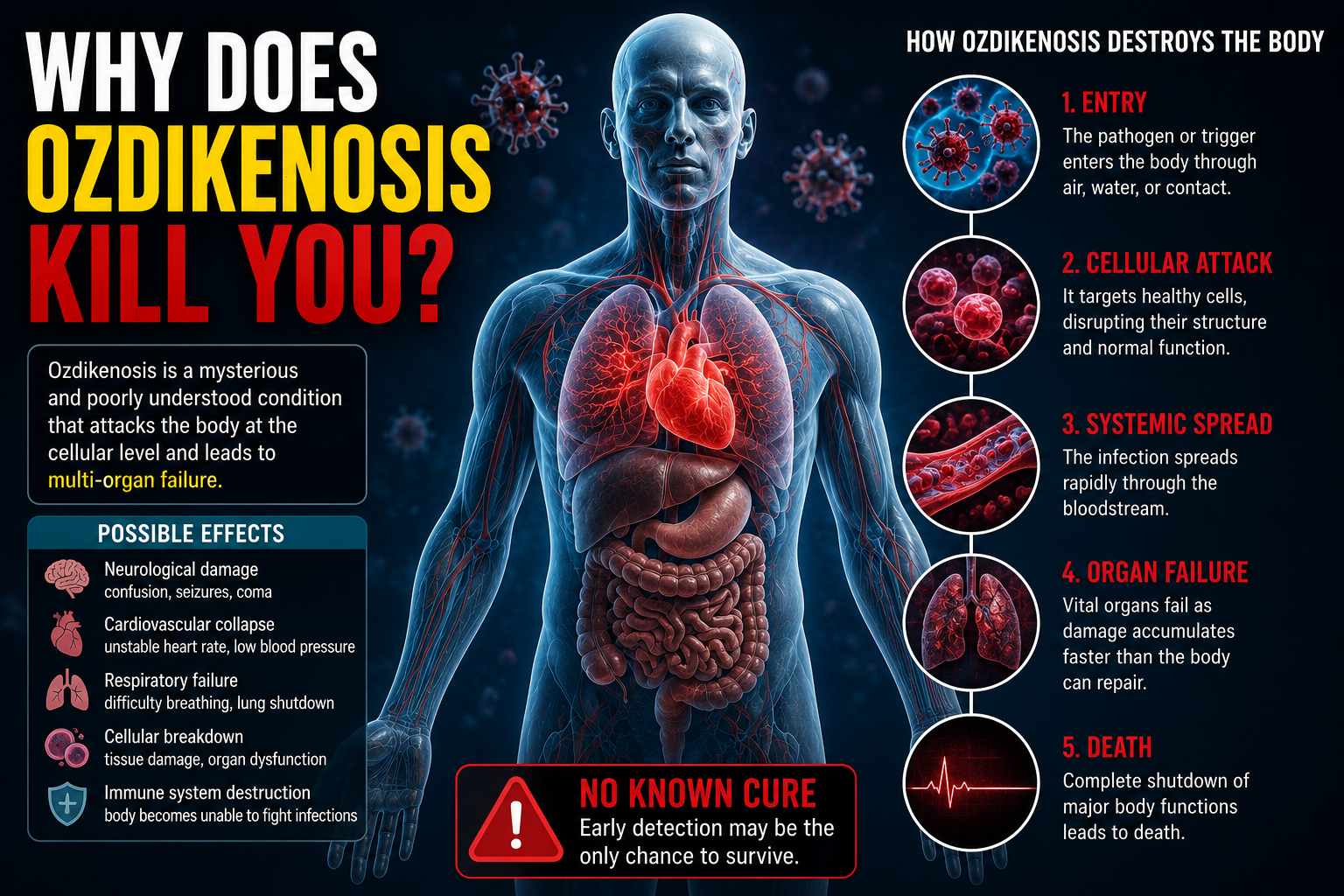
The internet has become a powerful source of information, but it has also become a place where unusual terms and unexplained topics can quickly gain attention. One phrase that has recently sparked curiosity is why does ozdikenosis kill you. The question appears serious, suggesting that ozdikenosis is a dangerous or even fatal condition. However, when people attempt to research it, they often discover a surprising lack of verified medical information.
This situation raises an important question: what exactly is ozdikenosis, and why are so many people searching for answers about it?
The reality is that understanding unfamiliar health-related terms requires careful investigation. Not every word that sounds medical represents a real disease, and not every viral topic is supported by scientific evidence. Exploring the mystery surrounding ozdikenosis offers a useful lesson in how health information spreads online and how people can separate facts from assumptions.
Understanding the Curiosity Behind the Search
The question why does ozdikenosis kill you immediately captures attention because it combines mystery with the possibility of danger. Human beings are naturally curious about unknown risks, especially when health and survival are involved.
Words that sound scientific often appear credible even before any evidence is examined. Medical terminology tends to be complex, and many genuine diseases have names unfamiliar to the general public. Because of this, readers may assume that ozdikenosis is a legitimate diagnosis requiring urgent attention.
This reaction is understandable. Throughout history, many serious illnesses were initially unknown to the public before becoming widely recognized. However, curiosity should always be balanced with careful research.
Is Ozdikenosis a Recognized Medical Condition?
One of the first steps in evaluating why does ozdikenosis kill you is determining whether ozdikenosis is actually recognized within modern medicine.
Medical conditions are typically documented through scientific studies, clinical research, healthcare databases, and professional publications. When diseases are identified, healthcare professionals establish diagnostic criteria, treatment recommendations, and descriptions of symptoms.
At present, there is no widely accepted evidence indicating that ozdikenosis exists as a recognized medical disorder within mainstream scientific literature. This absence of documentation is significant because serious diseases generally leave a substantial record of research and clinical discussion.
Without that evidence, it becomes difficult to classify ozdikenosis as an established medical condition.
How Unusual Terms Gain Popularity Online
The popularity of why does ozdikenosis kill you demonstrates how quickly unfamiliar phrases can spread across the internet.
Sometimes terms gain attention because they originate in fictional stories, online discussions, gaming communities, or creative content. In other situations, a misunderstood word may evolve into a trending topic simply because people continue asking questions about it.
The internet often rewards curiosity. When enough users search for a term, others notice the trend and begin investigating it themselves. This process can create a cycle in which interest grows even when reliable information remains scarce.
As a result, certain phrases become widely discussed despite lacking a foundation in verified facts.
Why People Assume Unknown Diseases Are Dangerous
When people encounter unfamiliar medical-sounding terms, they frequently assume the worst.
The phrase why does ozdikenosis kill you contains language that immediately suggests severe consequences. The inclusion of the word “kill” naturally creates concern and encourages readers to search for explanations.
Psychologists have long observed that uncertainty often increases anxiety. When individuals lack information, they may imagine scenarios that are more threatening than reality.
This tendency is especially common in health-related topics because personal well-being is involved. Even when evidence is limited, people often seek answers as a way to reduce uncertainty and regain a sense of control.
The Relationship Between Fear and Medical Misinformation
Fear plays a major role in how health information spreads online.
Searches related to why does ozdikenosis kill you illustrate how alarming claims can attract attention more quickly than neutral information. Dramatic headlines and mysterious disease names often generate stronger emotional reactions than carefully researched explanations.
Unfortunately, this environment can encourage misinformation. Once a rumor begins circulating, it may be repeated by multiple sources without independent verification.
The repetition itself can create an illusion of credibility. Readers sometimes assume that widely shared information must be true, even when no reliable evidence supports it.
This is why critical thinking remains essential when evaluating unfamiliar health claims.
Could Ozdikenosis Be a Fictional Condition?
A possible explanation for why does ozdikenosis kill you is that ozdikenosis may originate from fictional content rather than medical science.
Authors, game developers, and filmmakers frequently create fictional diseases to support storytelling. These invented conditions often sound realistic because they borrow naming conventions used in actual medicine.
Fictional illnesses can serve many purposes. They may drive a plot forward, create suspense, or explore hypothetical scientific scenarios.
If ozdikenosis originated from creative media, that could explain why people encounter references to it without finding reliable medical documentation. The realistic appearance of the name may lead some readers to assume it represents a genuine health condition.
How Real Diseases Become Scientifically Recognized
Understanding how medicine identifies diseases helps provide context for discussions about mysterious terms.
Researchers recognize illnesses through observation, clinical evidence, laboratory testing, and peer-reviewed studies. Medical professionals gather data from patients and evaluate patterns over time.
For a condition to be accepted within mainstream medicine, substantial evidence is required. Scientists must demonstrate consistent symptoms, biological mechanisms, and measurable effects.
When examining why does ozdikenosis kill you, it is important to note that such evidence does not currently appear to exist for ozdikenosis. Without scientific validation, claims regarding symptoms, mortality, or treatment remain speculative.
The Role of Search Engines in Popularizing Health Questions
Search engines are designed to respond to user interest. When people repeatedly search for a topic, algorithms may highlight related content and suggest similar questions.
This process can increase the visibility of phrases such as why does ozdikenosis kill you, even if authoritative information is limited.
Search popularity does not necessarily reflect scientific importance. A term may become widely searched because people are confused, curious, or responding to viral content.
For this reason, search trends should not be mistaken for medical evidence. Popularity and accuracy are not always connected.
Why Verification Matters in Health Discussions
Health-related information influences decisions that can affect people’s lives. As a result, accuracy is extremely important.
Whenever individuals encounter unusual terms such as why does ozdikenosis kill you, they should verify information through trusted sources. Healthcare organizations, medical journals, and licensed professionals provide far more reliable guidance than anonymous online discussions.
Verification helps prevent misunderstandings and reduces the spread of false information. It also ensures that legitimate medical concerns receive the attention they deserve.
In a world filled with information, the ability to distinguish reliable sources from speculation is increasingly valuable.
The Psychology of Internet Mysteries
Humans are naturally attracted to mysteries. Questions without clear answers encourage investigation and discussion.
Part of the appeal of why does ozdikenosis kill you comes from the uncertainty surrounding the term. People want to understand what it means, where it originated, and whether it represents a genuine threat.
Internet mysteries often become popular because each unanswered question creates additional curiosity. Communities form around solving puzzles, sharing theories, and exploring possibilities.
While this process can be entertaining, it is important to remember that speculation is not a substitute for evidence.
Lessons From Similar Online Phenomena
The internet has seen many examples of mysterious terms gaining popularity despite limited factual support.
Sometimes obscure phrases are mistakenly interpreted as real medical conditions. In other cases, fictional concepts become so widely discussed that they are treated as factual by some audiences.
The attention surrounding why does ozdikenosis kill you follows a similar pattern. Curiosity drives searches, searches generate discussion, and discussion increases visibility.
Recognizing this cycle helps readers approach unusual topics with a balanced perspective rather than immediately accepting dramatic claims.
How to Approach Unfamiliar Medical Claims
Whenever people encounter unfamiliar disease names, a systematic approach is helpful.
First, determine whether the condition appears in established medical references. Next, evaluate whether scientific evidence supports the claims being made. Finally, consider the credibility of the source providing the information.
Applying these steps to why does ozdikenosis kill you reveals the importance of skepticism when reliable evidence is lacking.
Healthy skepticism does not mean rejecting new information. Instead, it means requiring evidence before accepting conclusions.
Conclusion
The question why does ozdikenosis kill you has captured attention because it sounds like a serious medical mystery. However, available information suggests that ozdikenosis is not currently recognized as a documented disease within mainstream medicine.
The popularity of the term highlights how curiosity, uncertainty, and internet culture can transform obscure phrases into widely searched topics. While the name sounds scientific, there is no substantial evidence confirming that it represents a real condition or that it causes fatal outcomes.
Ultimately, the discussion surrounding ozdikenosis serves as a reminder of the importance of critical thinking and evidence-based research. In an age where information spreads rapidly, taking the time to verify claims is one of the most effective ways to separate fact from fiction and make informed decisions about health-related topics.