






Commercial buildings today demand durability, efficiency, and flexibility to meet changing business needs. From warehouses and manufacturing facilities to retail spaces and office complexes, steel has become one of the most preferred construction materials because of its strength, long lifespan, and design versatility. Whether a project involves a new industrial facility or an expansion of an existing structure, careful planning and quality execution are essential for long-term performance.
Choosing commercial steel building construction allows businesses to create structures that can withstand demanding environments while supporting future growth. Modern steel buildings are engineered to provide large column-free spaces, faster project completion, and reduced maintenance compared to many traditional construction methods. These advantages have made steel construction a preferred choice across multiple industries. Proper planning, engineering, and compliance with local building regulations are essential for achieving safe and efficient results.
What Is Commercial Steel Building Construction?
Commercial steel building construction refers to the process of designing, fabricating, and assembling commercial structures where steel serves as the primary structural framework. These buildings typically include steel columns, beams, rafters, purlins, and roof systems that work together to create a strong and stable structure.
Unlike conventional construction methods that often require extensive on-site work, many steel components are fabricated in controlled manufacturing facilities before being transported to the project site for assembly. This approach improves precision, reduces material waste, and accelerates construction schedules.
Why Steel Is Preferred for Commercial Buildings
Steel offers several practical advantages that make it suitable for commercial developments.
High Structural Strength
Steel has an exceptional strength-to-weight ratio, allowing buildings to support heavy loads while maintaining structural integrity. This makes it ideal for warehouses, factories, logistics centers, and large commercial facilities.
Faster Construction
Prefabricated steel components arrive ready for installation, reducing on-site fabrication time. Since site preparation and steel fabrication can occur simultaneously, project timelines are often shorter than conventional construction.
Flexible Interior Layouts
Steel structures can span long distances without requiring numerous interior columns. This creates open floor plans that can be customized for different commercial applications.
Future Expansion
Many steel buildings are designed with expansion in mind, making it easier to add new sections or modify layouts as business requirements change.
Key Stages of Commercial Steel Building Construction
Successful commercial steel building construction follows a systematic process that ensures structural safety and project efficiency.
Project Planning
Every project begins with defining building objectives, intended use, required floor area, future expansion plans, and budget considerations.
Site Evaluation
Before construction begins, engineers evaluate soil conditions, drainage, accessibility, and environmental factors. Proper site assessment helps determine the most suitable foundation design.
Structural Design
Engineers prepare detailed structural drawings while calculating loads related to wind, seismic activity, snow, equipment, and occupancy. Building codes and local regulations must be followed throughout the design process.
Fabrication
Steel members are cut, welded, drilled, and coated in fabrication facilities using precise engineering specifications. Factory-controlled production improves consistency and quality.
Foundation Construction
Concrete foundations are constructed before steel erection begins. Accurate placement of anchor bolts is critical because they connect the structural frame to the foundation.
Steel Erection
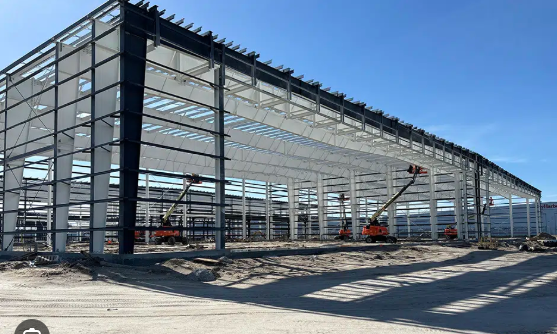
Once foundations have cured, cranes lift steel columns and beams into position. Crews then install secondary framing, roofing systems, and wall cladding to complete the structural shell.
Factors That Affect Construction Costs
Several variables influence project costs during commercial steel building construction.
Building Size
Larger structures require more structural steel, roofing materials, and labor.
Design Complexity
Special architectural features, crane systems, mezzanine floors, or custom layouts can increase engineering and fabrication requirements.
Foundation Requirements
Poor soil conditions or specialized foundation systems may increase overall project costs.
Material Prices
Steel prices can fluctuate based on market conditions, affecting project budgets.
Local Building Codes
Compliance with fire safety, energy efficiency, accessibility, and structural standards may also impact construction expenses.
Applications of Commercial Steel Buildings
Commercial steel buildings are suitable for numerous industries due to their adaptability.
Common applications include:
- Warehouses
- Distribution centers
- Manufacturing facilities
- Retail buildings
- Office complexes
- Agricultural processing facilities
- Aircraft hangars
- Automotive service centers
- Cold storage facilities
- Equipment storage buildings
Their flexible design allows owners to customize layouts based on operational requirements while maintaining long-term structural performance.
Best Practices for Long-Term Performance
Proper maintenance helps maximize the lifespan of steel structures.
Important maintenance practices include:
- Regular structural inspections
- Checking roof drainage systems
- Monitoring protective coatings
- Inspecting bolts and connections
- Addressing corrosion promptly
- Maintaining proper building ventilation
Routine inspections allow facility managers to identify potential issues before they become major structural concerns.
Sustainability Benefits
Steel is widely recognized as one of the most recyclable construction materials available. Many structural steel components contain recycled content and can be recycled again at the end of a building’s service life. Off-site fabrication also reduces material waste while improving construction efficiency.
Additionally, modern steel buildings can accommodate energy-efficient insulation systems, natural lighting solutions, and renewable energy installations such as rooftop solar panels, supporting sustainable building practices.
Conclusion
Modern commercial developments require buildings that combine durability, flexibility, and long-term value. Commercial steel building construction provides an efficient solution by offering strong structural performance, faster project completion, adaptable designs, and lower lifecycle maintenance requirements. Regular inspections and metal building repair further help preserve structural integrity, improve safety, and extend the lifespan of commercial facilities. When projects are carefully planned, engineered, and constructed according to industry standards, steel buildings can deliver reliable performance for decades.