






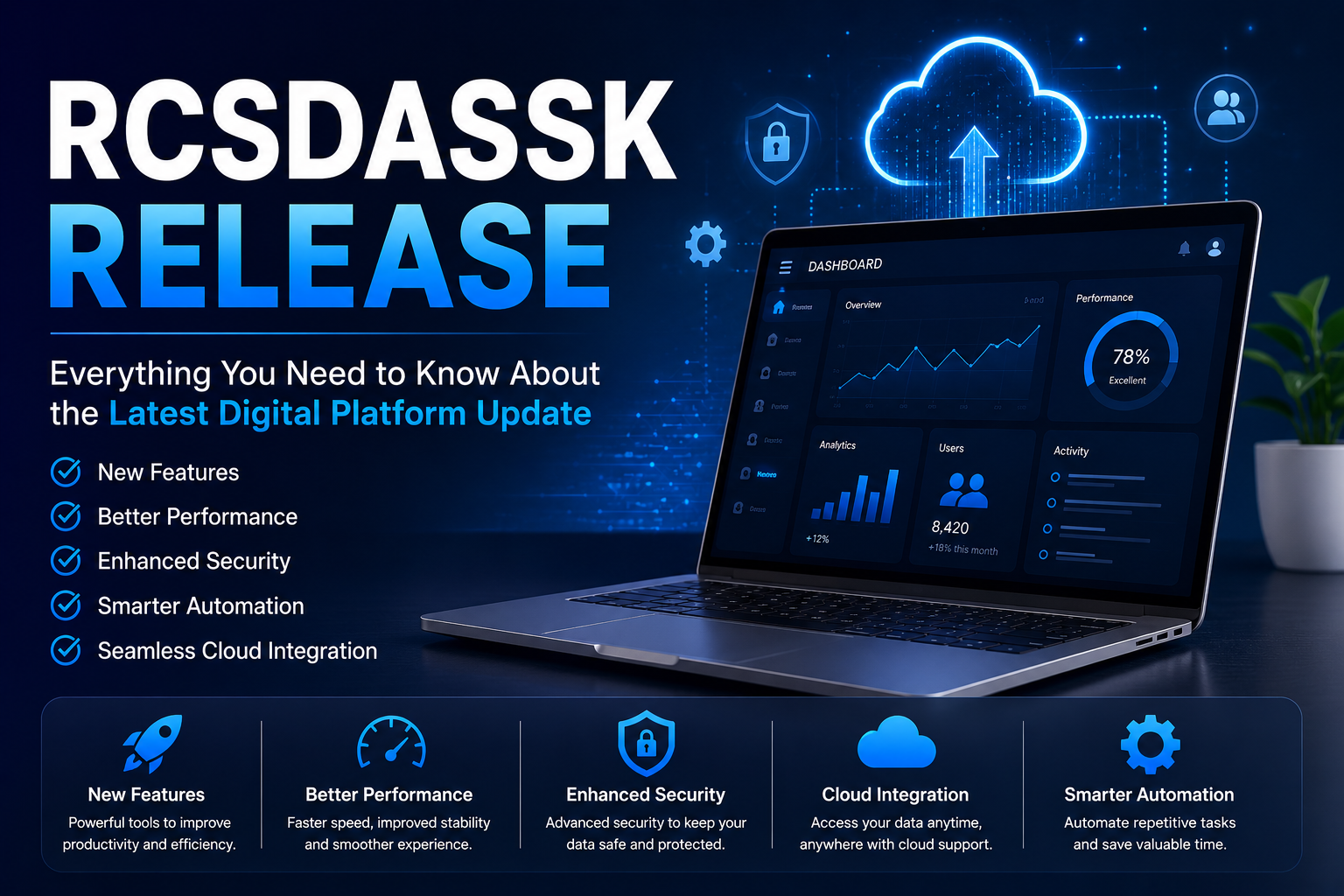
In the technology industry, software releases represent important milestones that mark progress, innovation, and the introduction of new capabilities. Every software product, digital platform, application, or technological framework undergoes a lifecycle that includes planning, development, testing, deployment, maintenance, and continuous improvement. Within this environment, terms associated with software updates and deployment processes often attract attention from developers, businesses, technology enthusiasts, and users. One such term generating interest is RCSDASSK Release.
Software releases play a critical role in ensuring that technology continues evolving to meet changing user needs and industry demands. Whether introducing new features, enhancing security, improving performance, or fixing known issues, releases help maintain the relevance and effectiveness of digital systems.
Understanding the broader significance of RCSDASSK Release requires examining how software releases function, why they matter, and how modern organizations manage the complex process of delivering technology updates in an increasingly digital world.
The Importance of Software Releases
Software development is a continuous process rather than a one-time event.
Applications and platforms must adapt to new technologies, user expectations, security threats, and business requirements.
The growing interest in RCSDASSK Release reflects broader curiosity about how software evolves over time.
A release serves as the bridge between development work and user availability. It transforms planning and coding efforts into practical improvements that users can access and benefit from.
Without regular releases, software would quickly become outdated and less effective in addressing modern challenges.
Continuous improvement remains essential for long-term success.
Understanding the Software Development Lifecycle
Every software product follows a development lifecycle.
This process typically includes requirements gathering, design, coding, testing, deployment, monitoring, and maintenance.
The significance of RCSDASSK Release can be understood within this larger framework of software lifecycle management.
Each stage contributes to the overall quality and reliability of the final product.
Releases represent important checkpoints where completed work becomes available to users.
Effective lifecycle management helps organizations maintain consistency, stability, and innovation throughout the development process.
Why Software Updates Matter
Technology changes rapidly.
New operating systems, hardware configurations, security threats, and user expectations require ongoing software adaptation.
The relevance of RCSDASSK Release reflects the importance of keeping digital systems current and functional.
Updates often introduce performance improvements, compatibility enhancements, and new capabilities that help software remain competitive.
Users increasingly expect applications to evolve continuously rather than remain static.
Organizations that invest in regular updates often provide better experiences and stronger long-term value.
The Role of Innovation in Software Releases
Innovation drives technological advancement.
Many software releases introduce features that improve productivity, efficiency, accessibility, or functionality.
The attention surrounding RCSDASSK Release highlights the connection between software deployment and innovation.
Organizations use releases to introduce ideas that address changing market demands and emerging opportunities.
Innovation helps software remain relevant in competitive environments.
Users benefit from technologies that continually improve and adapt to modern requirements.
Progress depends on a commitment to ongoing development.
Testing Before Release
Testing is one of the most important stages in software development.
Before any release reaches users, developers typically evaluate functionality, performance, security, and reliability.
The discussion around RCSDASSK Release reflects broader interest in quality assurance and software reliability.
Testing helps identify issues before deployment, reducing risks and improving user satisfaction.
A well-tested release is more likely to deliver stable and predictable performance.
Quality assurance remains essential for maintaining trust and credibility.
Organizations invest significant resources in testing processes for this reason.
User Experience and Software Releases
User experience plays a major role in determining whether software succeeds.
Releases often focus on improving usability, navigation, accessibility, and responsiveness.
The growing visibility of RCSDASSK Release can be linked to the increasing importance of user-centered design.
Technology should solve problems efficiently while remaining easy to use.
Enhancements that improve user experience often contribute significantly to adoption and satisfaction.
Organizations that prioritize users frequently achieve stronger outcomes and greater long-term loyalty.
Security as a Release Priority
Cybersecurity remains one of the most critical concerns in modern technology.
Software releases frequently include security updates designed to address vulnerabilities and strengthen protection.
The relevance of RCSDASSK Release aligns with the broader emphasis on safeguarding digital systems and user information.
Security improvements help organizations defend against evolving threats.
Users expect software providers to maintain strong security standards and respond quickly to emerging risks.
Security-focused releases contribute directly to trust and reliability.
Protection remains an ongoing responsibility.
Performance Optimization Through Releases
Performance optimization is another common objective of software releases.
Applications must remain responsive and efficient as technology environments evolve.
The significance of RCSDASSK Release can be understood through its connection to continuous performance improvement.
Optimization efforts often focus on reducing loading times, improving resource utilization, and enhancing overall responsiveness.
Better performance contributes to stronger user experiences and greater operational efficiency.
Organizations that prioritize optimization often gain competitive advantages.
Efficiency remains a key measure of software quality.
The Rise of Agile Development
Many modern software teams use agile methodologies to manage development and releases.
Agile approaches emphasize flexibility, collaboration, and iterative improvement.
The growing interest in RCSDASSK Release reflects broader trends toward continuous delivery and incremental updates.
Rather than waiting for large-scale deployments, organizations often release improvements more frequently.
This approach allows faster responses to user feedback and market changes.
Agility has become a defining characteristic of modern software development.
Adaptability remains a major advantage.
Continuous Integration and Deployment
Technology teams increasingly rely on automated processes to support software delivery.
Continuous integration and deployment practices help streamline development workflows.
The discussion surrounding RCSDASSK Release exists within a larger context of automation and operational efficiency.
Automated systems reduce errors and accelerate deployment cycles.
These practices help organizations deliver updates more reliably and consistently.
Efficiency gains support faster innovation and improved responsiveness.
Automation continues reshaping how software is developed and released.
Managing User Expectations
Software releases often generate anticipation among users.
People expect updates to provide meaningful improvements while maintaining stability.
The relevance of RCSDASSK Release includes the challenge of balancing innovation with reliability.
Organizations must communicate changes clearly and manage expectations effectively.
Transparency helps build trust and encourages user engagement.
Successful releases often combine technical excellence with strong communication strategies.
User satisfaction depends on both performance and understanding.
The Importance of Documentation
Documentation plays a critical role in software releases.
Users, developers, administrators, and support teams rely on documentation to understand changes and functionality.
The attention given to RCSDASSK Release reflects broader recognition of the importance of clear communication.
Comprehensive documentation supports adoption, troubleshooting, and ongoing maintenance.
Well-documented releases help reduce confusion and improve user experiences.
Information accessibility contributes significantly to software success.
Documentation remains an essential component of professional development practices.
Software Releases and Business Strategy
Technology decisions often align closely with business objectives.
Organizations use software releases to support growth, efficiency, customer satisfaction, and competitive positioning.
The significance of RCSDASSK Release extends beyond technical considerations into broader strategic planning.
Successful releases help organizations achieve operational and commercial goals.
Technology investments are often evaluated based on their ability to create value and support long-term objectives.
Strategy and technology increasingly work together.
The Impact of Cloud Computing
Cloud computing has transformed software deployment.
Many modern applications are delivered and updated through cloud-based environments.
The growing interest in RCSDASSK Release reflects broader changes in how software reaches users.
Cloud infrastructure enables faster deployment, greater scalability, and improved accessibility.
Organizations benefit from the flexibility and efficiency provided by cloud technologies.
Cloud-based delivery continues influencing software development and release practices worldwide.
Its impact remains substantial.
User Feedback and Continuous Improvement
User feedback provides valuable insights into software performance and usability.
Organizations often incorporate feedback into future development cycles.
The discussion around RCSDASSK Release highlights the importance of listening to users and responding to their needs.
Feedback-driven improvements help ensure that software remains relevant and effective.
Continuous improvement supports stronger user relationships and better outcomes.
Successful organizations view feedback as a valuable resource rather than a challenge.
Learning remains essential.
Scalability and Long-Term Planning
Software must often support growing user bases and expanding requirements.
Scalability helps ensure that systems remain effective as demand increases.
The relevance of RCSDASSK Release includes considerations related to future growth and adaptability.
Scalable architectures reduce the need for disruptive changes later.
Organizations that plan for expansion often experience smoother growth trajectories.
Long-term thinking contributes significantly to sustainable software success.
Preparation remains a key element of effective technology management.
Emerging Technologies and Future Releases
The technology landscape continues evolving rapidly.
Artificial intelligence, automation, machine learning, advanced analytics, and other innovations influence software development priorities.
The growing visibility of RCSDASSK Release reflects broader interest in future technological possibilities.
Emerging technologies create opportunities for enhanced functionality and efficiency.
Organizations must remain aware of trends and developments that may influence future releases.
Innovation continues shaping the direction of the software industry.
Adaptation remains essential.
Collaboration Within Development Teams
Successful software releases require collaboration across multiple disciplines.
Developers, designers, testers, project managers, and business stakeholders all contribute to the process.
The significance of RCSDASSK Release can be connected to the importance of teamwork in technology environments.
Collaboration improves communication, problem-solving, and project execution.
Cross-functional cooperation helps ensure that releases meet technical and business objectives.
Strong teamwork contributes to higher-quality outcomes and greater organizational effectiveness.
Measuring Release Success
Organizations often evaluate releases using various performance indicators.
Metrics may include adoption rates, user satisfaction, system stability, and operational impact.
The discussion surrounding RCSDASSK Release reflects broader interest in measuring technology outcomes effectively.
Data-driven evaluation helps organizations identify strengths and improvement opportunities.
Measurement supports informed decision-making and continuous refinement.
Success is often defined by both technical performance and user value.
Assessment remains an important practice.
The Future of Software Releases
Software releases will continue evolving as technology advances.
Automation, artificial intelligence, cloud computing, and advanced analytics are likely to influence future deployment strategies.
The relevance of RCSDASSK Release extends into discussions about how software delivery may change in coming years.
Future releases may become even more seamless, personalized, and responsive.
Organizations that embrace innovation while maintaining reliability will likely remain competitive.
Adaptability and learning will continue driving progress.
The future offers significant opportunities.
Conclusion
Software releases are essential to the ongoing evolution of technology. They enable organizations to introduce innovations, improve performance, strengthen security, and respond to changing user needs. In a world where digital systems play an increasingly important role, effective release management has become a critical component of technological success.
The growing interest in RCSDASSK Release reflects broader awareness of software development, deployment processes, and the importance of continuous improvement. Whether viewed from a technical, operational, or strategic perspective, software releases help ensure that digital systems remain effective, relevant, and competitive.
As technology continues advancing, the significance of RCSDASSK Release will remain connected to innovation, adaptability, and the ongoing effort to deliver valuable digital experiences in an increasingly connected world.